
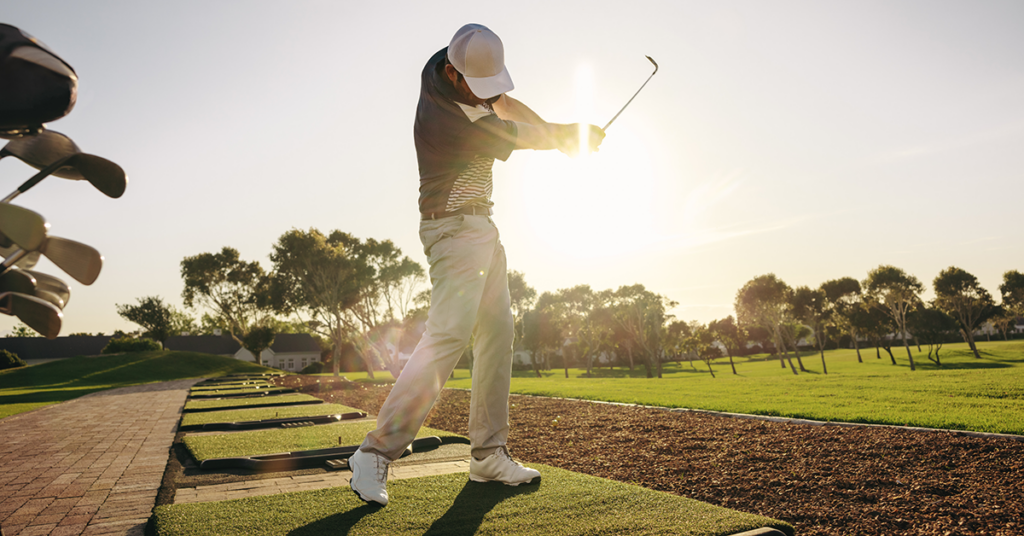
Why the Knees Matter
The knees don’t always get the attention they deserve in the golf swing, and that oversight may be costing you more than you realize.
Instruction often focuses on the hands, shoulders, or hips. Speed is chased. Positions are analyzed. But quietly underneath it all, the knees help control balance and manage how force moves between the ground and the body.
Think of the knees as the swing’s suspension system. They sit between the feet and the hips, absorbing force and keeping movement from getting out of control, much like a suspension system keeps a car stable over uneven ground. When they work well, everything above them works more smoothly. When they don’t, the swing starts to unravel.
When pressure drifts forward, the knees move with it. When posture rises, they react. When the body sways or over-rotates, they try to steady you.
Understanding what the knees are doing is the first step to understanding how the swing really works.
Knee Position at Setup
At setup, the knees should be slightly flexed — not squatted, locked, or stiff. Think athletic. Picture a shortstop waiting for a ground ball: balanced and ready to move.
This slight flex supports posture. When the knees are soft, your weight settles naturally over the middle of your feet. If they straighten too much, turning becomes restricted. If they bend too much, posture begins to drop and the hips lose freedom.
Pressure at address should be spread between the heels and the balls of the feet, with slightly more toward the balls. No rocking forward. No sitting back. When your pressure is centered, the knees settle naturally.
If your weight shifts toward your toes, the knees drift forward. If it moves back toward the heels, they retreat. They mirror what your feet are doing.
A locked knee is rigid. An over-bent knee is unstable. A properly flexed knee is ready to move.
Many swing problems start right here. If the knees aren’t positioned correctly, the rest of the motion has to compensate.
Setup isn’t just a starting position — it sets the tone for everything that follows.
The Trail Knee in the Backswing
In the backswing, the trail knee provides stability while the hips turn.
As the club moves away, the trail hip moves behind you. The trail knee maintains its flex and keeps the lower body steady so the pelvis can rotate without sliding away from the target.
Pressure moves into the inside of the trail foot, and the trail knee feels that same load. You may also notice the knees move slightly closer together as the hips turn — not because you are squeezing them, but because rotation naturally brings them inward a bit.
You are rotating around the trail side — not drifting onto it.
If the trail knee straightens too much, the turn becomes restricted. If it collapses outward, balance becomes inconsistent. Either way, the coil weakens before the downswing even begins.
What this often feels like:
The inside of the trail foot feels loaded, and the body coils without sliding away from the ball.
Knee Movement During the Transition
Transition is where pressure shifts from the trail foot to the lead foot.
As the downswing begins, weight moves into the lead foot and the lead knee starts to move slightly toward the target. At the same time, pressure leaves the trail side.
Early in the downswing, the knees begin to separate as weight shifts forward and the hips start to turn. As impact approaches and the lead side firms, they narrow again naturally.
This shift happens before the club fully drops. When it’s timed well, the body changes direction smoothly instead of lunging forward.
If weight stays back too long, the upper body takes over. If the body slides sideways instead of shifting pressure, balance suffers.
A clean transition moves weight early so the hips can begin turning through the ball.
The Lead Knee at Impact
By impact, most of your pressure should be in the lead foot.
The lead knee firms slightly as it supports your weight. It doesn’t need to snap straight, but it must steady the lead side so the hips can keep turning.
With weight into the lead foot, the body has something solid to rotate against. The hips open, the torso follows, and the club moves through from a stable base.
If the lead knee stays soft and unstable, rotation slows and contact often suffers.
The lead knee isn’t creating speed — it’s allowing it.
What this often feels like:
The lead side feels steady and supportive as you turn through the ball.
Knee Movement in the Short Game
As the swing shortens, the knees become quieter.
In putting, they hold posture but do not move. There is no shift from side to side. The lower body stays steady while the stroke is controlled by the shoulders and arms.
In chipping, there is still no loading into the trail side. Weight starts mostly on the lead foot and stays there. During the downswing, the lead knee may firm slightly as pressure settles forward.
The shorter the swing, the less the knees need to do.
What Your Knees Reveal About Your Golf Swing
Because the knees sit between the feet and hips, they often show when something else is off.
If your weight drifts to your toes, the knees will move forward. If your turn stalls, the trail knee may straighten. If balance shifts late, the lead knee may never fully steady.
The knees are rarely the cause of the problem — but they often show the first signs of it.
They are the swing’s suspension system. They absorb force, steady movement, and help keep you centered between the ground and your hips.
Part of The Swing System
This article is part of a series focused on how the body moves in the golf swing. Each piece builds toward a more organized and repeatable motion.
Continue the Swing System:
The Golf Grip: Awareness Before Control